
Permit vs visa in Canada | work, study, travel, or stay

The concepts of permit and visa in Canada are confusing. I have noticed that even some immigration students have trouble understanding them. Therefore, this article compares permit vs visa in Canada.
- What is a visa?
- What does a visa counterfoil include?
- How is a permit different from a visa?
- What does a permit include?
- Permit vs visa recap
- Immigration Q&A
What is a visa?
A visa is permission to travel to Canada. Unless you are exempt, you must have a visa to board an airplane destined to Canada. Of course, a visa is also a document that assists a border services officer in deciding whether to allow you to enter or not. Nonetheless, a visa does not guarantee entry.
Sometimes you receive a Single Journey Travel document to travel to Canada. However, most of the time, a visa is a counterfoil or sticker in your passport. The following picture shows a redacted sample.

What does a visa counterfoil include?
Before comparing visa and permit, let’s quickly review a visa counterfoil. Of course, personal information is a staple of a counterfoil. However, you may find more such as the UCI of the holder and the category. The latter is helpful to identify the purpose of the visit. For example, V-1 means a visitor, but W-1 refers to a foreign worker and S-1 to an international student.
How is a permit different from a visa?
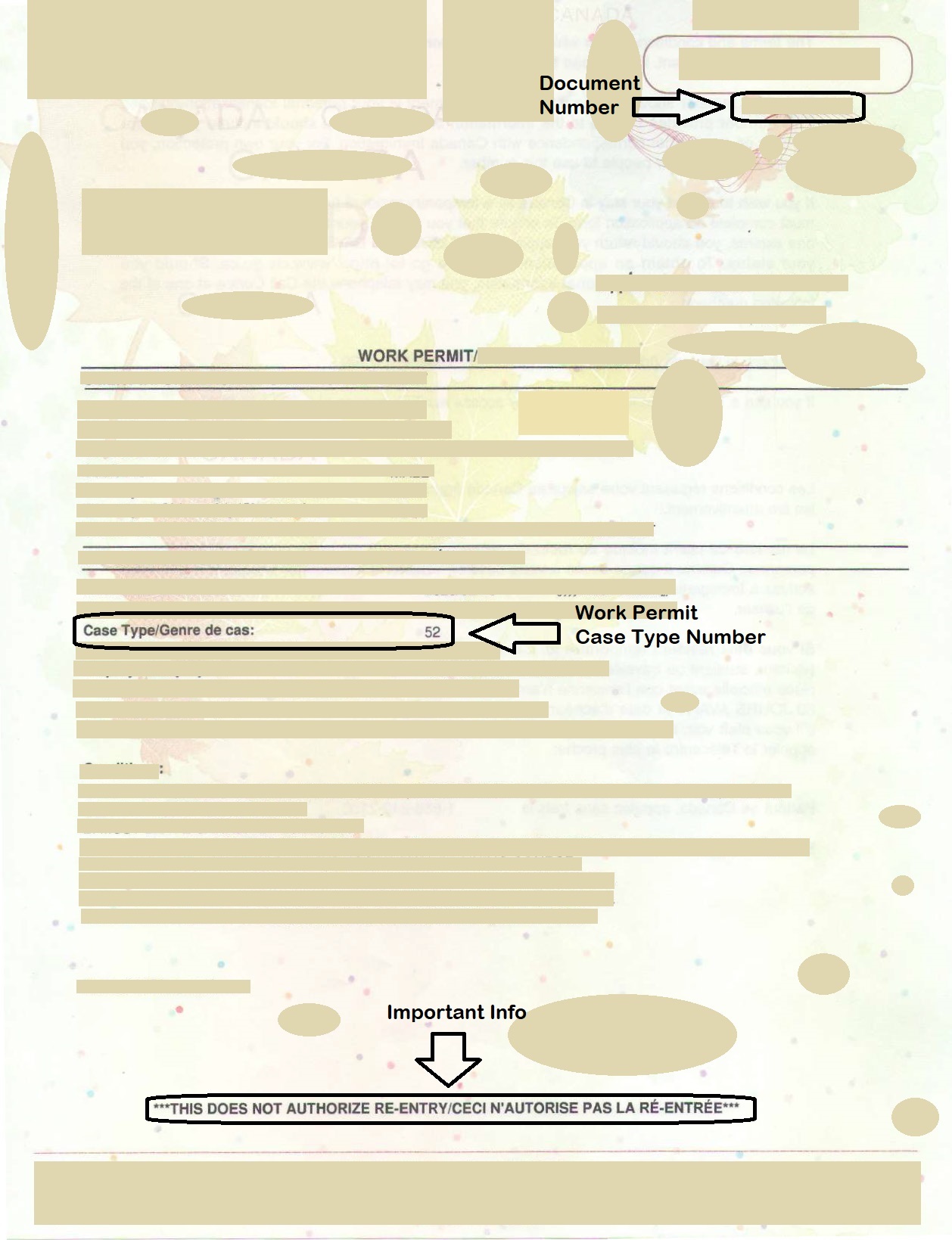
A permit is a permission to remain in Canada. Unlike a visa, you may not use a permit to enter Canada. The only exception is when you are flagpoling via the United States. The following picture shows a sample redacted permit.
What does a permit include?
A typical permit includes the personal information of the holder and the expiry date. It also consists of the terms or conditions attached to the permit. Of course, the most common permits include a Visitor Record, a Work Permit, a Study Permit and a TRP.
Permit vs visa recap
Here is a brief comparison of permits and visas in Canada.
- A visa is a counterfoil attached to a passport, but a permit is a standalone document.
- You use permits to remain in Canada and enjoy the authorizations they offer. However, a visa is for the ability to travel and enter Canada.
- Do not use a permit for re-entry unless flagpoling from the United States. On the other hand, holding a visa is no guarantee for remaining in Canada.
- When you apply for a work permit or study permit, you also need a visa to travel to Canada. Nevertheless, an immigration officer issues the visa for you if they approve your work permit or study permit application.
- The officers do not issue a permit for typical stays in Canada that lasts less than six months. However, if there are significant deviations, they usually give a Visitor Record which is a permit.
People who are exempt from a visa may travel to Canada without a visa counterfoil in their passport. However, when they reach Canada, they may need a permit to stay. Regardless, consider the last bullet point above.
Questions about Canadian immigration
If you have general questions about Canadian immigration, fill out the following form. Of course, a broad question could be: Could you compare permit vs visa in Canada? However, for specific questions, please book an appointment with me.


If you are interested in visiting or immigrating to Canada, please complete our free assessment form.
There is no fee for this assessment. We will review your information and contact you if we identify a suitable immigration pathway or other meaningful option for you.
If you would prefer direct advice about your specific situation, you may book a consultation session. This is a paid service and includes formal immigration advice from a licensed Canadian immigration practitioner.
Al Parsai, LLM, MA, RCIC-IRB
Regulated Canadian Immigration Consultant
Adjunct Professor, Queen’s University Faculty of Law
Instructor, Ashton College, Immigration Consulting Program
Author of 88 Tips on Immigration to Canada and Inadmissibility to Canada for Human Rights Violations
Complete Our Free Canada Immigration Assessment Form in Your Language: